Modern Methods of Construction
Updated: Aug 2
In the building industry, the phrase modern methods of construction (MMC) is becoming more common, and for good reason. When you’re planning a new home build, you no longer have to rely on traditional construction methods such as brick-and-mortar or timber-frame assembly onsite.
New construction techniques offer faster build times, better quality control and more sustainable outcomes. Among these, SIPs (Structural Insulated Panels) stand out as a compelling option for Australian homes.
What Are Modern Methods of Construction?

Modern Methods of Construction is a term given to a shift in the construction industry - one that is more centred on off-site prefabrication. MMC offers a more accurate, efficient and sustainable way to approach new builds, providing home-owners, builders and developers with more consistent and quality controlled methods.
In MMC, components or entire modules are prefabricated or manufactured off-site under controlled conditions and then installed onsite. This might include panelised construction, modular or volumetric units, or hybrid systems combining off-site fabrication with onsite assembly.
Benefits of MMC include:
Accelerated build timelines because less time is wasted waiting for weather or separate trades
Improved quality control thanks to factory conditions and precision manufacture
Reduced onsite waste and material inefficiencies
Some MMC options:
Panelised construction, such as Structural Insulated Panels (SIPs), are prefabricated panels that are precision cut to size and arrive onsite ready for installation. This option allows for greater flexibility, customisation and fast build times while still being affordable.
Volumetric construction means entire rooms or modules are built off-site and then transported in. These deliver very fast on-site assembly but may limit design freedom or face transport logistics.
Insulated Concrete Forms (ICF) use foam blocks filled with concrete and offer great insulation and durability, though they tend to be heavier, more expensive and less flexible in design.
3D printing is still in its early stages, but may allow for design flexibility and construction sustainability. As it's an emerging technology, it’s important to note that upfront costs can be high and its compliance is complex as building regulations and codes are still catching up.
While MMC covers many forms, for owner-builders, registered builders, architects and custom project specialists, one approach stands out: SIPs.
The flaws of traditional construction methods
Traditional construction methods, such as timber-framing, are familiar, flexible and still widely used in Australian construction. Timber-framing allows for on-site change and has been used for decades, but it can be much slower and less predictable.
Timber framing, also known as stick-framing, has many downsides such as:
Fluctuations in costs due to timber prices and availability
Slower method that needs more trades (framing and insulation need to be completed separately)
More onsite waste due to the inherent nature of the method and increased incidences of human error.
Less airtight and the home then relies more on heating and cooling to maintain a comfortable indoor environment.
Why SIPs Are a Great MMC Option

What are SIPs?
SIPs consist of rigid insulation cores sandwiched between structural facings (often OSB or other engineered boards).
These panels are factory-fabricated to exact dimensions and then assembled on-site to form walls, roofs and floors. Their controlled fabrication means tight joints, high insulation performance and minimal waste. You can learn more about our Smart SIPs by exploring our website.
Build Time & Efficiency
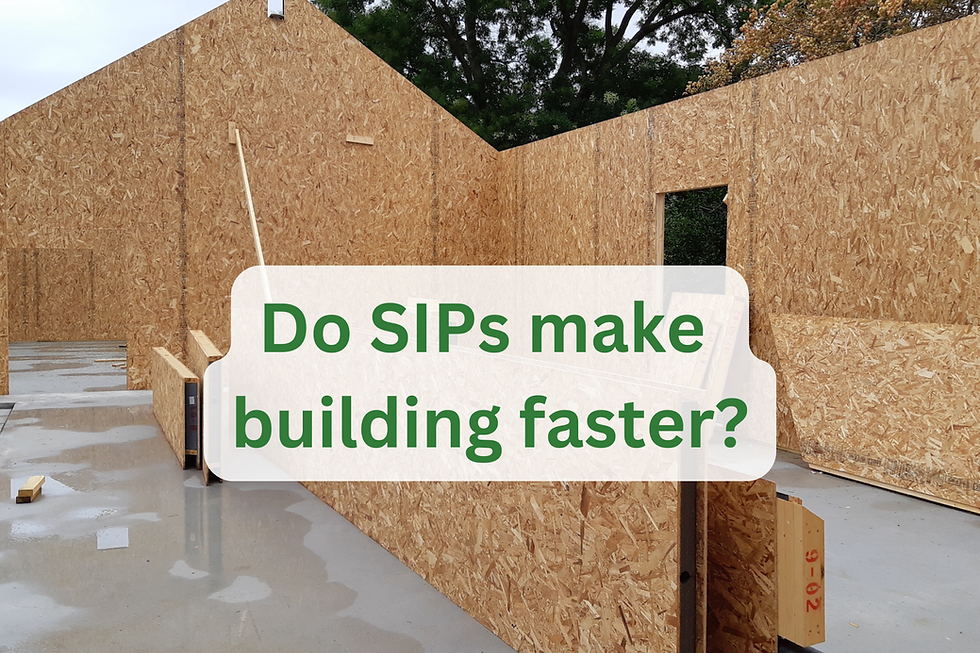
Because SIPs arrive pre-cut and engineered, onsite assembly is significantly quicker than conventional builds. Fewer trade handovers, less weather interference and fewer onsite errors translate into faster completion and generally better cost predictability. This is exactly what modern methods of construction aim to achieve. SIPs cost a bit more upfront than traditional methods, but due to their performance (explained more below) you will see considerable savings across the lifetime of your home in reduced energy bills. You will also typically save with the faster construction time and less labour/trades needed.
Performance & Sustainability

SIPs deliver high levels of thermal insulation, minimise air leakage and avoid the common issues of cavity insulation sagging. This means lower heating and cooling loads, lower running costs and a smaller carbon footprint. These are key performance benefits of MMC, but SIPs deliver them in a way that aligns with custom residential builds that is highly suitable for the Australian construction landscape.
You can maximise your home’s sustainability and energy efficiency through careful planning and consideration, such as passive design (home orientation, shading, ventilation, etc.), the use of water conservation methods (rainwater harvesting, greywater systems, and water-efficient appliances), smart home integration (such as solar panels) and more.
Design Flexibility
One of the myths around prefabrication is that it locks you into a bland design. But SIPs actually offer excellent design freedom: open-plan layouts, large spans, custom rooflines, varied external finishes and more. They combine the precision of factory manufacture with architectural flexibility.
As well as manufacturing and supplying SIPs, we also offer custom home design so you can create a beautiful and sustainable home suited to your exact needs.
SIPs for Australian homes
Australia’s climate is hugely varied, from humid tropics, dry inland, to cold alpine regions. A construction method that works in one zone might struggle in another.
With SIPs, you get a system that adapts well to many conditions:
In hot and dry regions, SIPs reduce heat penetration during the day and slow heat loss at night thanks to their insulation and airtight envelope.
In humid or coastal zones, properly detailed SIPs help control moisture ingress, limit mould risk and maintain stable indoor conditions.
In cooler climates and alpine zones, SIPs retain warmth far better than standard cavity systems, reducing reliance on heating.
That means across Australia, SIP-based homes deliver year-round comfort, lower energy bills and a more reliable performance envelope. When energy costs keep rising, a home that uses less to heat or cool is a smart long-term choice.
By prefabricating panels and reducing onsite labour and waste, SIPs support the objectives of MMC and align with Australian goals for construction productivity and sustainability. Our SIPs are fully BCA compliant and have been subjected to thorough third-party testing.
How to Start Your SIPs Build
If you’re looking to build a home that employs a modern construction system, delivers high performance and aligns with your local climate demands, then SIPs should be a serious consideration.
At Smart SIPs, we manufacture, supply and offer full home design services for SIP-based homes across Australia. We can guide you through custom home design, manufacturing, on-site logistics and finishing so you get the benefits of modern construction without sacrificing your vision.
Explore our website to learn more about us and SIPs, or contact us for an obligation-free chat.
Ready to explore how SIPs can become your chosen building method? Contact us to discuss your next project.
Frequently Asked Questions About Modern Methods of Construction (MMC)
Interested in learning more about how advanced building techniques are transforming residential construction in Australia? We’ve answered the most common questions below to help you see how Modern Methods of Construction and SIPs can streamline your next project.
1. What are Modern Methods of Construction (MMC)?
Modern Methods of Construction (MMC) refers to an industry-wide shift toward off-site prefabrication and advanced manufacturing techniques. Instead of relying entirely on traditional onsite assembly like brick-and-mortar or timber framing, MMC uses factory-controlled prefabrication to produce precision components - such as panelised systems like SIPs - that are shipped to the site for rapid installation.
2. How do SIPs fit into Modern Methods of Construction?
Structural Insulated Panels (SIPs) are one of the leading panelised forms of MMC used for residential construction in Australia. SIPs combine framing and high-performance rigid insulation into single, factory-fabricated panels that form external walls, internal walls, roofs, and floors. This combines two separate construction trades into one, accelerating site assembly while maintaining strict quality control.
3. How does MMC with SIPs compare to traditional timber framing?
Traditional timber framing relies on cavity insulation added on-site, which can suffer from human error, sagging over time, and delays due to weather. In contrast, MMC with SIPs uses precision, factory-cut panels that fit together with millimeter accuracy. This creates a much tighter, draught-free building envelope with minimal thermal bridging, reduced job site waste, and significantly faster build times.
4. Does adopting Modern Methods of Construction limit custom home design?
No, off-site MMC prefabrication with SIPs actually enhances architectural flexibility. Because SIP panels offer high structural strength without requiring as many internal support beams or trusses, designers can easily incorporate open-plan layouts, expansive spans, custom rooflines, and diverse external finishes while still benefiting from precision factory manufacturing.
5. How do Modern Methods of Construction help control costs and timelines?
MMC controls costs and timelines by shifting major construction steps into a factory environment. Factory-engineered SIP panels arrive pre-cut to exact specifications, requiring fewer trade handovers, significantly reducing on-site labour hours, and heavily reducing weather-related delays. While MMC can have slightly higher upfront material costs, it yields predictable build schedules, lower labour expenses, reduced onsite waste, and long-term energy bills for the life of the home.